Best STEM Toys for Kids in 2026: Top Picks for Every Age Group
If you’ve ever watched a kid’s eyes light up the moment something clicks — a circuit sparks to life, a marble finds its way through a maze, or a robot follows their command for the first time — you already know what great STEM toys are capable of. The challenge is finding the ones that hold attention beyond the first afternoon. In 2026, the market is flooded with toys that say they’re educational but deliver little more than flashing lights and forgotten batteries. The real gems are different: they build genuine skills, invite repeated play, and make kids forget they’re learning anything at all.
The best STEM toys available right now span a huge range of ages, budgets, and skill levels — from magnetic tiles for toddlers to electronics kits that genuinely challenge tweens. Whether your child is a hands-on builder, a puzzle-obsessed thinker, or a budding scientist who wants to blow things up (safely, with a chemistry kit), there’s something on this list for them. We’ve dug into thousands of verified reviews, tested-by-experts roundups, and real parent feedback to bring you the best of the best.
Quick Picks
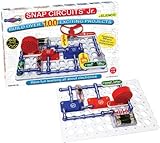 Snap Circuits Jr. SC-100 Electronics Exploration Kit — $29.98
With 100+ snap-together electronics projects and no soldering required, this award-winning kit turns kids into junior engineers one click at a time.
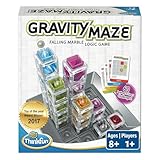 ThinkFun Gravity Maze Marble Run Brain Game and STEM Toy — $29.99
This Toy of the Year winner combines marble runs and logic puzzles to build spatial reasoning skills kids (and parents) will happily obsess over.
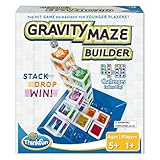 ThinkFun Gravity Maze Builder for Kids 5 & Up — $24.99
A MESH-accredited younger sibling to the classic Gravity Maze, perfectly sized for ages 5+ who are just getting started with logic and spatial thinking.
| Product | Best For | Age | Price |
|---|---|---|---|
| Snap Circuits Jr. SC-100 | Electronics & circuits | 8+ | ~$30 |
| ThinkFun Gravity Maze | Logic & spatial reasoning | 8+ | ~$30 |
| ThinkFun Gravity Maze Builder | Younger logic learners | 5+ | ~$25 |
| Magna-Tiles Classic 100-Piece Set | Open-ended building | 3+ | ~$130 |
| National Geographic Break Open Geodes | Science exploration | 8+ | ~$25 |
| 3Doodler Start+ Essentials 3D Pen Set | Creative STEM/art | 6+ | ~$50 |
Our Top STEM Toy Picks for 2026
🔌 Best for Electronics: Snap Circuits Jr. SC-100
This is the gold standard for introducing kids to electronics. The Snap Circuits Jr. SC-100 has earned a 4.8-star rating across nearly 30,000 Amazon reviews — the highest rating of any electronics kit in its category. The concept is brilliantly simple: 28+ color-coded, numbered components snap onto a plastic grid to build working circuits like alarms, fans, doorbells, light sirens, and even a small flying saucer. No soldering, no loose wires, no tools.
Why parents love it:
- 100+ guided projects in a full-color manual kids can follow independently
- Components snap together and apart — no frustration, no tools
- Expandable with upgrade kits (UC-30, UC-40, UC-60) for 300–750 projects
- Award-winning design with a decade of refinement behind it
It’s one of those rare toys that kids beg to return to. Elementary-schoolers will find it engaging, and parents often end up joining in.
🧩 Best Logic Puzzle: ThinkFun Gravity Maze
ThinkFun’s Gravity Maze is the most-reviewed STEM toy in its class — 4.6 stars across 37,000+ Amazon reviews — and it ranks #1 in Amazon’s Marble Runs category for good reason. The concept is deceptively simple: arrange transparent towers on a grid so a marble drops from a starting point and rolls into a target. But 60 progressively harder challenge cards escalate from “solve it in 30 seconds” to staring at the board for half an hour.
Why parents love it:
- Builds spatial reasoning in 3D — kids think about gravity, angles, and tower height
- Screen-free and completely self-contained
- Equally captivating for ages 8 to adult
- Compact and great for travel
One parent summed it up perfectly: their 9-year-old “laughs and enjoys figuring out what went wrong” when a setup fails. That kind of productive frustration is exactly what great STEM learning looks like.
🏗️ Best for Builders (Ages 3–6): Magna-Tiles Classic 100-Piece Set
Magnetic tiles are the undisputed king of early STEM play, and Magna-Tiles are the brand that started it all. The Classic 100-piece set features strong magnets that snap structures together effortlessly — from simple squares to complex castles, ramps, and vehicles. The rounded edges and BPA-free materials make them safe for little hands, and with 100 vibrant pieces, they encourage cooperative building, spatial reasoning, and creative open-ended play.
Why parents love it:
- Works for ages 3 all the way through middle elementary
- Encourages sibling and family cooperative play
- No instructions needed — completely open-ended
- Structures actually stay together thanks to strong magnets
🪨 Best Science Kit: National Geographic Break Open Geodes (10-Pack)
Nothing hooks a kid on science quite like cracking open a real rock and finding sparkling crystals inside. The National Geographic Geodes 10-Pack includes safety goggles, an information guide, and 10 whole geodes to crack open — each one a genuine geological surprise. It’s a tangible introduction to earth science that feels like treasure hunting.
Why parents love it:
- Real rocks = real “wow” factor, every single time
- Includes goggles and a learning guide (great for budding scientists)
- No batteries, no screens, no setup
- Makes a fantastic birthday gift
Heads up: Cracking geodes with a hammer requires adult supervision, especially for kids under 8.
🖊️ Best Creative STEM: 3Doodler Start+ Essentials 3D Pen Set
If your child is the creative type who still deserves serious STEM cred, the 3Doodler Start+ is a revelation. Kids draw in three dimensions, building anything from flowers and glasses frames to miniature furniture and animals. The creative ceiling is essentially unlimited — one of the only STEM toys where that’s genuinely true. The pen is USB-C rechargeable, has no hot parts, and is safe for kids 6 and up.
Why parents love it:
- Fuses art and engineering in a truly unique way
- No hot tip — safe for young hands
- Open-ended with endless projects possible
- Great for STEAM-oriented kids who love making things
Note: The included filament runs out after 5–6 small projects. Budget for filament refill packs ($10–$20 each) to keep the creativity flowing.
Buying Guide
1. What age should kids start with STEM toys?
Kids can start with STEM-focused toys as early as 2–3 years old using simple sensory and building toys. By ages 5–6, they’re ready for logic puzzles and magnetic tile sets. Robotics, coding kits, and electronics kits are best introduced around ages 7–8 when abstract thinking and fine motor skills have developed enough for guided challenges.
2. Are screen-free STEM toys better than app-connected ones?
Both have value! Screen-free toys like Gravity Maze and Snap Circuits are excellent for pure hands-on, tactile learning without passive screen time. App-connected toys like Osmo can add interactivity and real-time feedback. In 2026, the trend is leaning back toward screen-free options, as parents prioritize tactile engagement and reduced device time.
3. What’s the difference between STEM and STEAM toys?
STEM covers Science, Technology, Engineering, and Math. STEAM adds “Arts” to the mix — creative tools like the 3Doodler pen fall into this category, blending imaginative design with engineering principles. Both categories build critical thinking; STEAM just leaves more room for open-ended creative expression.
4. How do I know if a STEM toy is actually educational — or just clever marketing?
Look for toys that require active problem-solving rather than just button-pressing. The best STEM toys let kids fail, adjust, and try again — that iterative process is where real learning happens. Also check for award recognition (Toy of the Year, Dr. Toy awards), high verified review counts on Amazon, and whether the toy grows with the child over multiple skill levels.
5. What’s a good budget for a quality STEM toy?
You don’t need to break the bank. Many of the highest-rated STEM toys on Amazon — including Snap Circuits Jr. and ThinkFun Gravity Maze — land in the $25–$35 range and consistently outperform flashier, more expensive options. For larger gifts (birthdays, holidays), sets like Magna-Tiles in the $100–$130 range offer the most long-term replay value of any toy in their category.