Walk down any toy aisle and it’s easy to feel like great tech toys require a second mortgage. Flashy robots, VR headsets, AI companions — the price tags can be jaw-dropping. But here’s what seasoned parents and educators know that the marketing doesn’t tell you: some of the most powerful, engaging tech toys for kids cost less than a family dinner out. The secret is choosing toys that prioritize doing over watching — the kind that put your kid in the driver’s seat of discovery.
In 2025, the best budget tech toys are smarter than ever. They blend coding, engineering, circuitry, and logic into hands-on experiences that kids return to again and again. Whether your child is 5 or 13, curious about electronics or obsessed with puzzles, there’s an outstanding option well under $60 that will keep them engaged for months — not just minutes. We’ve done the research so you don’t have to.
Quick Picks
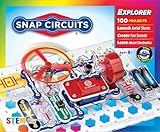 Snap Circuits Jr. SC-100 Electronics Exploration Kit — $27.99
An award-winning beginner electronics kit that lets kids build 100+ real working circuits — no soldering, no stress, just pure discovery.
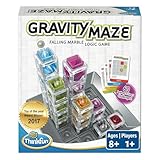 ThinkFun Gravity Maze Falling Marble Logic Game — $29.99
A screen-free marble logic game with 60 escalating challenges that sharpens spatial reasoning and engineering thinking in kids 8 and up.
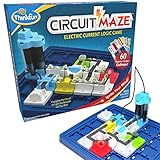 ThinkFun Circuit Maze Game — $24.99
Kids build real, working electrical circuits to light up beacons across 60 brain-bending challenges — sneaky STEM learning at its finest.
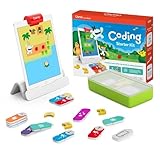 Osmo - Coding Starter Kit for iPad — $59.99
Physical coding blocks meet tablet magic in three progressive games that teach real programming logic to kids ages 5–10 — no Wi-Fi needed.
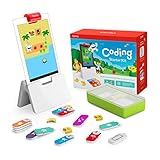 Osmo - Coding Starter Kit for Fire Tablet — $44.99
The perfect hands-on coding starter kit for Amazon Fire Tablet families, bundling three award-winning learning games approved in over 40,000 classrooms.
| Product | Best For | Price Range |
|---|---|---|
| Snap Circuits Jr. SC-100 | Budding electrical engineers, ages 8+ | ~$28 |
| ThinkFun Gravity Maze | Logic puzzle lovers, ages 8+ | ~$30 |
| ThinkFun Circuit Maze | STEM game nights, ages 8+ | ~$25 |
| Osmo Coding Starter Kit (iPad) | Young coders with iPads, ages 5–10 | ~$60 |
| Osmo Coding Starter Kit (Fire Tablet) | Young coders with Fire Tablets, ages 5–10 | ~$45 |
Detailed Reviews
Snap Circuits Jr. SC-100 Electronics Exploration Kit
Ages: 8+ | Price: ~$28 | Screen-Free: ✅
If your kid has ever wondered how a doorbell works — or what’s inside a radio — this is the kit for you. Snap Circuits Jr. is a perennial bestseller for a reason. It contains 28 color-coded components that snap together on a plastic grid (no soldering, no tools required) and comes with a full-color project manual covering 100+ DIY experiments.
Kids can build a working:
- Sound-activated switch
- Musical doorbell
- Flying saucer launcher
- Police siren with flashing lights
What makes it genuinely special is how the learning sneaks up on kids. They think they’re just snapping colorful pieces together, but they’re actually internalizing the fundamentals of electrical circuits, switches, transistors, and more. It’s earned multiple Dr. Toy and National Parenting Center awards, and it’s been a classroom staple for years.
Pro parent tip: Pick up a set of rechargeable AA batteries — this kit gets heavy use and will burn through disposables fast.
ThinkFun Gravity Maze
Ages: 8+ | Price: ~$30 | Screen-Free: ✅
This is the rare toy that looks like pure play but operates as a full-blown engineering and logic lesson. Gravity Maze is a marble run challenge game that comes with 60 progressively difficult challenge cards — from beginner to expert — plus 9 transparent towers, 3 marbles, a game grid, and a target piece. The goal: arrange the towers so gravity guides your marble from start to target.
Why parents love it:
- Completely screen-free and self-contained
- Challenges scale with the child’s skill level — no quick burnout
- Builds spatial reasoning, logical thinking, and planning skills
- Quiet enough for airplane travel or waiting rooms
ThinkFun, with over 50 million games sold worldwide, has long been trusted by parents and educators. Gravity Maze was a Toy of the Year Award winner and continues to earn rave reviews years after its launch. This is the kind of toy that sits on the shelf not because it’s been forgotten — but because the child is actively working through all 60 challenges.
ThinkFun Circuit Maze
Ages: 8+ | Price: ~$25 | Screen-Free: ✅
Think of Circuit Maze as Gravity Maze’s electrically-charged sibling. Instead of marbles and gravity, this game challenges kids to create a real, working electrical circuit that lights up colored beacons. The 60 challenges range from simple single-beacon setups to complex multi-beacon puzzles that’ll stump adults too.
Highlights:
- Uses actual electronic components — the circuits really work
- 60 challenges from beginner to expert difficulty
- Teaches logic, planning, and the fundamentals of how electricity travels
- Toy of the Year finalist and PAL Award winner
This is a standout value pick because it delivers genuine STEM education (circuitry concepts that align with middle school science) in a format that feels like a puzzle game. It’s one of the best options for kids who love a challenge but haven’t yet taken the leap into full electronics kits.
Heads up: Requires 3 AAA batteries (not included).
Osmo Coding Starter Kit for iPad
Ages: 5–10+ | Price: ~$60 | Requires: iPad (not included)
Osmo has cracked one of the hardest problems in kids’ tech toys: how do you make screen time feel like hands-on play? The answer is physical coding blocks that interact with your tablet’s camera to control characters and games in real time — no Wi-Fi needed.
The Coding Starter Kit includes three progressive games:
- Coding Awbie – Use physical blocks to guide a character on an adventure (intro to coding logic)
- Coding Jam – Build musical beats using patterns and loops (intermediate coding concepts)
- Coding Duo – Side-by-side coding puzzles with 60+ challenges (advanced teamwork and strategy)
Kids learn logic, sequencing, creative problem-solving, and even music composition — all through colorful physical blocks and a familiar screen. It’s used in over 40,000 classrooms worldwide, which tells you everything about its educational credibility.
Important note: Requires an iPad (not included). The Osmo Base for iPad is included in the kit.
Osmo Coding Starter Kit for Fire Tablet
Ages: 5–10+ | Price: ~$45 | Requires: Amazon Fire Tablet (not included)
Same award-winning Osmo experience — three games, 31 physical coding blocks, and the Osmo Base — but designed specifically for Amazon Fire Tablet users. This version is also an Amazon Exclusive, so it’s often available at a slightly lower price point than the iPad version, making it the better budget pick for families who already own a Fire Tablet.
Why choose this over the iPad version:
- Typically $10–$15 cheaper
- Amazon Fire Tablets are themselves much more affordable than iPads
- The Osmo Base for Fire Tablet is included
- Identical gameplay and educational content
If you’ve already invested in the Amazon Kids ecosystem (Fire Tablet + Kids+ subscription), the Osmo Coding Kit slots right in as the perfect complement — hands-on physical play that balances out all that screen time.
Buying Guide
What’s a “budget” tech toy?
For this guide, we’re targeting toys under $60 — ideally under $40 where possible. The sweet spot for value is $25–$50: enough investment to get quality components, but accessible for birthdays, holidays, or just-because gifts.
Do budget tech toys actually hold kids’ attention?
Yes — especially when they’re active rather than passive. The best options encourage kids to build, problem-solve, and experiment. As one educator perspective notes, “simpler tools invite more exploration because kids aren’t afraid to experiment, fail, and try again.” A $30 marble logic puzzle can outlast a $200 screen toy in engagement time.
What age is best for these picks?
- Ages 5–7: Osmo Coding Starter Kit (with a parent nearby)
- Ages 8–10: All five picks are excellent; Snap Circuits and Circuit Maze are top-tier
- Ages 11+: Snap Circuits and Gravity Maze offer enough depth and challenge to stay interesting
Are any of these truly screen-free?
Three of the five picks — Snap Circuits Jr., ThinkFun Gravity Maze, and ThinkFun Circuit Maze — are completely screen-free. The Osmo kits require a tablet but use physical blocks, so they blend screen and hands-on interaction in a balanced way.
Can these be used in a classroom or homeschool setting?
Absolutely. Snap Circuits, both ThinkFun games, and Osmo are all widely used in educational settings. Look for Snap Circuits multi-packs for classrooms, and note that Osmo’s curriculum aligns with common core STEM standards for grades K–5.