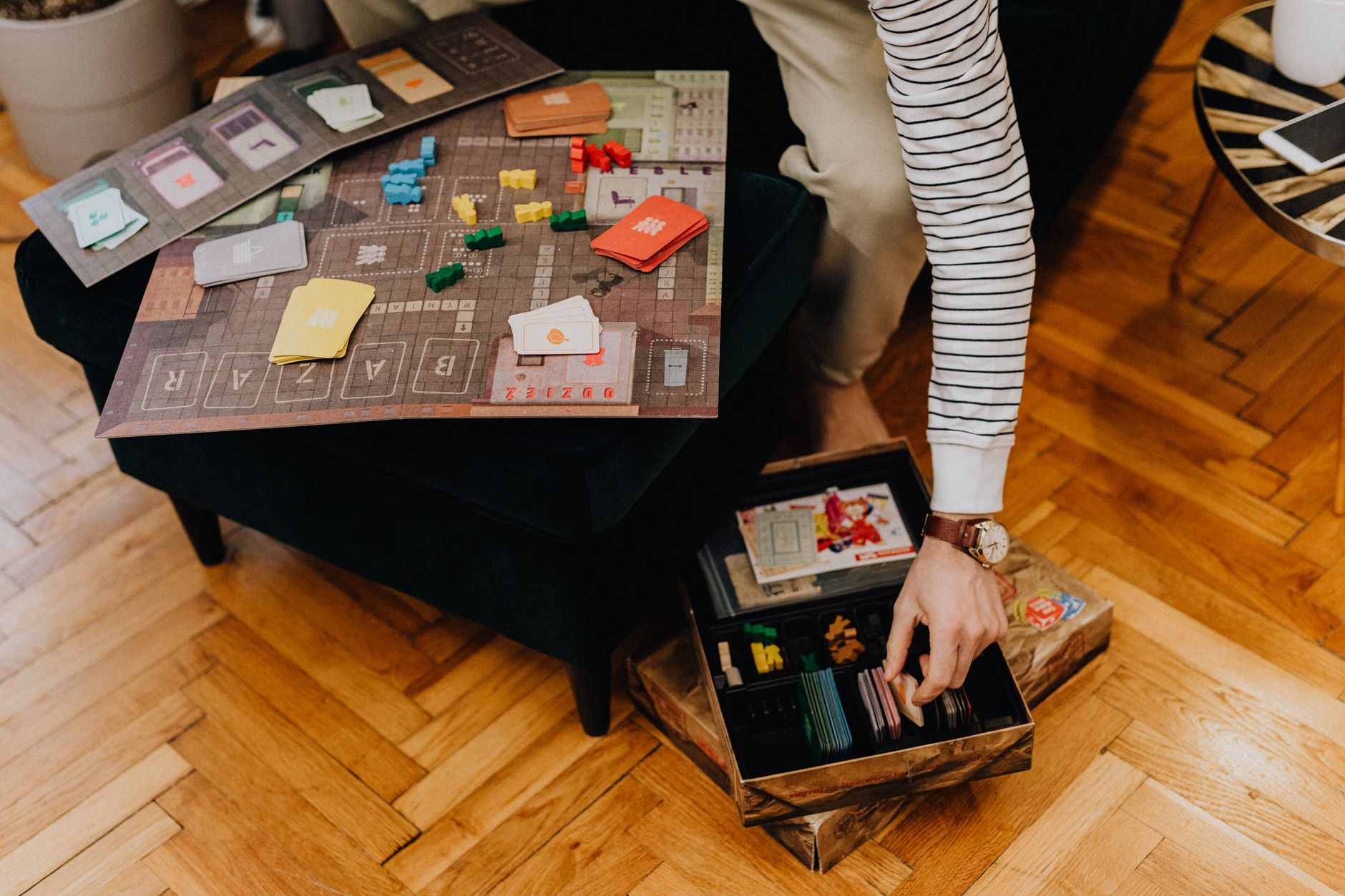
If your child abandons a game halfway through, flips the board in frustration, or simply cannot seem to sit still long enough to finish a round, you are not alone. Short attention spans are one of the most common reasons parents tell us family game night falls apart before it even gets started.
Here is the thing most game boxes do not tell you: a child’s ability to focus is not fixed. Research in child development consistently shows that attention span is trainable, and the activities we choose for our kids can either stretch that window or let it stay where it is. Board games happen to be one of the more effective and low-effort tools for doing the stretching.
This guide breaks down what a realistic attention span looks like at each age, how board games work to gradually extend it, and how to choose games that fit where your child is right now instead of where you wish they were.
What a Normal Attention Span Actually Looks Like by Age
Before you can choose the right game, it helps to know what you are working with. A widely used clinical guideline suggests roughly two to five minutes of focused attention per year of age, with the upper end reached when the task is genuinely interesting. That means a five-year-old might realistically focus for 10 to 15 minutes on an engaging activity, while a nine-year-old can manage closer to 18 to 27 minutes before focus starts to fray.
For ages 4 to 6, most child development experts put the natural attention window at around 8 to 15 minutes for self-directed play, but note that interesting, structured activities with an adult or sibling can push that meaningfully higher. By age 6 or 7, children can typically sustain focus for up to 25 to 35 minutes when the task is right.
The takeaway for parents is simple: a child who cannot finish a 60-minute game at age six is not misbehaving. The game is the wrong length. Matching game duration to your child’s current focus window is the single biggest lever you have for making game night feel like a win instead of a battle.
How Board Games Actually Train Focus
Board games work on attention in ways that most screen-based activities do not. A 2025 systematic review in the Bulletin of Counseling and Psychotherapy found that analog board and card games featuring fast-response mechanics consistently improved sustained attention, working memory, and executive function across children aged 3 to 18. The research points to a key reason: board games require children to hold rules in mind, track other players, and wait their turn, all of which demand active, directed attention rather than the passive kind that screen watching can encourage.
A separate 2025 study published in ScienceDirect found that a structured board game program improved inhibition, flexibility, and sustained attention in school-age children, with researchers noting that the metacognitive element of games helped kids focus better and manage distractions. One educator quoted by Scholastic put it plainly: board games, when played without interruptions, help lengthen a child’s attention span, but everyone has to commit to finishing the game.
The mechanism is gradual and cumulative. Each completed game is a small rep in the attention-building workout. Over weeks and months, children who play regularly tend to find it easier to sit with a task, tolerate the slow parts, and stay engaged even when the game is not going their way.
Matching Game Length to Your Child’s Age
One of the most practical things you can do is stop reading the age range on the box and start reading the play time. Here is a rough framework:
Ages 3 to 5: Look for games that wrap up in under 15 minutes. Simple matching, color, and memory games are ideal. These short loops let young children experience the satisfying arc of a complete game, which itself builds the habit of seeing things through.
Ages 6 to 8: The sweet spot shifts to 15 to 25 minutes. Children at this stage can follow multi-step rules and hold a strategy in mind across several turns. Games with a clear progression, where you can see yourself getting closer to the goal, tend to hold attention better than open-ended formats.
Ages 9 to 12: Children in this range can comfortably manage 45 to 60 minutes, especially if there are meaningful decisions to make throughout. They also benefit from games where skill compounds over repeated plays, which gives them a reason to stay focused and come back.
Ages 13 and up: Teens can sustain focus for longer sessions, particularly when the game involves social strategy or complex systems. The key at this age is genuine challenge. Games that feel too easy lose them fast.
Practical Tips for Stretching Focus Without a Fight
Knowing the research is one thing. Actually sitting down with a five-year-old who wants to check out after seven minutes is another. A few approaches that work:
Start shorter than you think you need to. When you first introduce a new game, pick one that runs well under your child’s maximum attention window. A successful, complete game builds more motivation for next time than a half-finished marathon that ended in tears.
Remove competing distractions. Phones away, TV off, no background noise if possible. Research on attention consistently shows that environmental distractions, not just internal ones, reduce focus duration. A distraction-free table is a genuine advantage.
Play at the right time of day. A study of 10,000 children found that attention fluctuates across the day, with many children showing stronger focus in the afternoon. Avoid game time right after school when energy is low or right before bed when focus is already winding down.
Be a patient model. Children watch how adults handle waiting, losing, and slow moments. When you demonstrate calm, engaged focus through a whole game, you are teaching more than any rule can.
A Note on Kids Who Struggle More Than Average
Some children find sustained attention genuinely harder, whether because of temperament, developmental differences, or conditions like ADHD. The good news is that board games appear particularly useful for this group. There is emerging evidence that abstract strategy games may support attention in children with ADHD by engaging the frontal brain regions involved in regulating focus and impulse control. Fast-paced games with short, self-contained rounds can help these children practice concentration in manageable bursts before gradually building to longer play.
If your child consistently struggles to complete even very short games without becoming distressed or dysregulated, that is worth discussing with a pediatrician or child psychologist. But for the wide range of kids who simply find focus challenging in today’s high-stimulation environment, regular board game play is a well-supported, low-pressure place to start building that skill. The fact that it happens to also be fun is not a bonus. It is the whole point.
Related Guides
- our picks for short, engaging games that actually work for younger kids
- longer, more strategic games suited to kids with a more developed focus window
- how games build executive function alongside attention
- setting up a game night routine that keeps everyone engaged from start to finish
Frequently Asked Questions
How long should a board game be for a 5-year-old?
For most five-year-olds, games that finish in 10 to 15 minutes are the best fit. At this age, a typical focused attention window runs roughly 8 to 15 minutes for engaging activities, so a short game that completes a satisfying arc is far better than a longer game that falls apart halfway through.
Can board games really help a child with a short attention span?
Yes. Research consistently shows that regular board game play improves sustained attention, working memory, and impulse control in children. The key is choosing games matched to your child’s current focus window and gradually introducing slightly longer games as their stamina grows.
My child always quits games early. Is something wrong?
Usually, no. The most common reason children quit mid-game is that the game is too long for their developmental stage, not a behavioral problem. Try switching to a shorter game that matches their age-appropriate attention window and see if completion rates improve before drawing any other conclusions.
Do board games help kids with ADHD focus?
There is growing evidence that they can. Abstract strategy games have been linked to improvements in attention in children with ADHD by engaging frontal brain regions involved in focus and impulse control. Fast-paced games with short rounds are generally the best starting point for children who find sustained attention especially challenging.