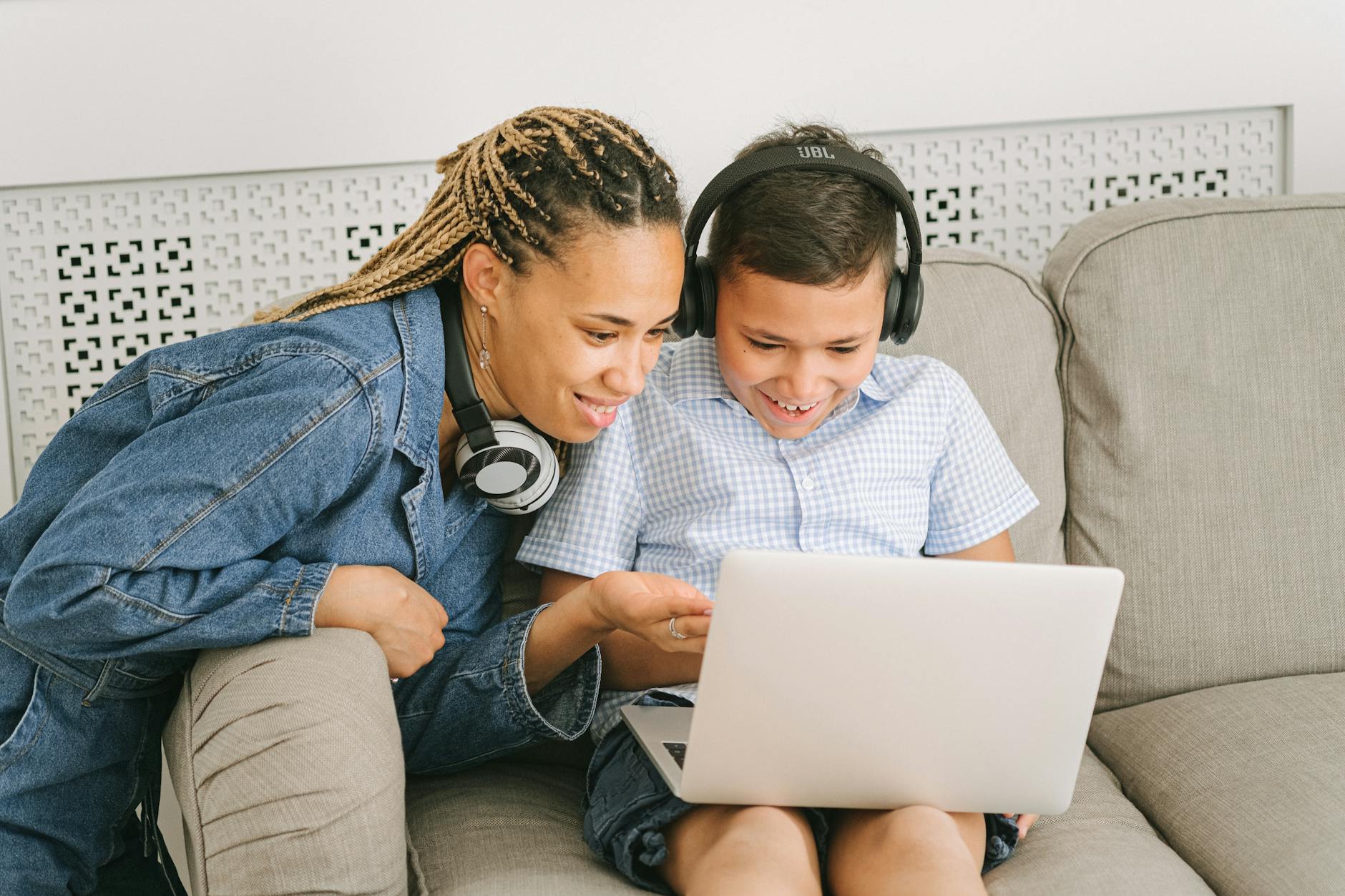
If your child uses headphones for school, gaming, or road trips, you have probably noticed how quickly the volume creeps up. It happens fast, and most kids have no idea they are doing any damage. The frustrating part is that noise-induced hearing loss does not announce itself. It builds quietly over months and years, and by the time symptoms show up, some of it is permanent.
The scale of the problem is larger than most parents realize. Research highlighted by the CDC found that roughly 1 in 6 to 8 middle and high school students already has measurable hearing loss that is likely tied to noise exposure. Children are especially vulnerable because their auditory systems are still developing well into their teenage years, their ear canals amplify sound differently than adult ears do, and they genuinely cannot tell when a volume level is crossing into dangerous territory.
The good news is that this is entirely preventable. Choosing the right style of headphones, understanding what the decibel numbers on the packaging actually mean, and setting a few simple rules can protect your child’s hearing for life. This guide breaks down everything a parent needs to know, without the technical jargon.
Why Kids’ Ears Need Different Rules Than Adults'
Children’s ears are not simply smaller versions of adult ears. The inner ear and its auditory pathways continue developing until around age 20, which means prolonged exposure to loud sounds during childhood can cause damage that compounds over an entire lifetime. On top of that, a child’s ear canal is still growing, and the proportional difference in anatomy means higher-pitched sounds are amplified more intensely as they travel through a young ear.
Because children cannot accurately self-regulate volume or recognize the early warning signs of hearing damage, they rely on parents to set boundaries for them. Left to their own devices, many kids will simply crank the volume to drown out background noise, whether that is a noisy car, a loud classroom, or a sibling in the next room.
The warning signs worth watching for include ringing in the ears after a listening session, muffled hearing, or a child consistently asking you to repeat yourself. These are signals to take seriously and to bring up with your pediatrician at the next visit.
The Volume Numbers Parents Actually Need to Know
The World Health Organization and pediatric audiologists recommend that children listen to personal audio devices at no higher than 75 decibels, for no more than 40 hours per week. That is a stricter standard than many people expect, and it is worth knowing because many headphones marketed as “kid safe” actually cap volume at 85 or even 90 decibels, which is higher than what major health bodies recommend for children specifically.
A simple real-world test works well for any age: if your child is wearing headphones and cannot hear you speaking from an arm’s length away, the volume is already too loud. Another widely cited guideline from audiologists is the 60/60 rule, which means no more than 60% of maximum volume for no more than 60 minutes at a time.
For younger children, some experts recommend an even more conservative approach: keeping volume below 50% of the device’s maximum and limiting total daily listening time to around one hour. Most smartphones and tablets allow parents to set a hard volume ceiling in their settings, which removes the temptation entirely. On iPhones and iPads, the Screen Time parental controls include a “Reduce Loud Sounds” option that can be locked with a passcode so children cannot override it.
Over-Ear Headphones vs. Earbuds: Which Is Safer for Kids?
For younger children, over-ear headphones are the clear recommendation from pediatric ear specialists. The reason comes down to physics: earbuds sit inside the ear canal and deliver sound much closer to the eardrum, which can increase the effective volume by 6 to 9 decibels above the stated output. That gap matters enormously when you are trying to stay within safe limits.
Over-ear headphones sit outside the ear canal, distribute pressure gently across the ear, and make it easier for a parent to check the fit visually. They are also far less likely to cause the outer ear canal infections that earbuds can contribute to, since earbuds trap moisture and bacteria against skin that is not meant to stay covered.
The general guidance from pediatric otolaryngologists and audiologists is to avoid earbuds entirely for children under age 8, and to use them only cautiously for ages 8 through 12 with volume limiting in place. For teens 13 and up, earbuds become more practical, but over-ear headphones with a hardware volume limit still offer better hearing protection for extended listening sessions such as studying or gaming. If your family is shopping for a pair, our roundup of best kids headphones for summer covers tested options across age groups.
What ‘Volume-Limited’ on the Packaging Really Means
Many headphones marketed for children carry a “volume-limited” label, but that label does not always mean what parents assume. Independent testing has found that up to a third of children’s headphones allowed volumes exceeding 85 decibels in standard conditions, and nearly half exceeded that threshold when tested with louder music. Several models also allowed the volume-limiting feature to be bypassed entirely.
When evaluating headphones, look for products that use a hardware volume limiter built into the circuitry itself rather than a software setting that can be toggled off. A hardware limit cannot be overridden by a child pressing buttons or adjusting an app. Also consider that noise-canceling or noise-isolating headphones actually support safer listening because they block ambient sound, which removes the temptation to turn the volume up to compete with background noise.
Fit also matters more than most parents realize. Headphones that are too large slide around, creating poor sound isolation and prompting kids to raise the volume to compensate. Look for models sized specifically for children’s heads, with adjustable bands and cushioning. A well-fitting pair at moderate volume will almost always deliver better sound quality than an adult-sized pair cranked up to be heard clearly. For teens who use headphones heavily for studying, the same principles apply, and our guide to best headphones for teens studying at home walks through what to prioritize.
Building Safe Listening Habits That Actually Stick
Rules land better when children understand the reason behind them. The American Speech-Language-Hearing Association suggests talking with kids directly about why their hearing is worth protecting. Framing it around something they enjoy, such as music, gaming, or video calls with friends, tends to resonate more than abstract warnings about future consequences.
A few practical habits make a real difference over time. Encouraging a listening break of a few minutes every hour gives ears a chance to recover from sustained exposure. Keeping device volume limited through parental controls takes the negotiation out of it entirely. Modeling safe volume habits yourself also matters: children notice when the same parent who enforces the 60% rule regularly listens at full blast.
For children who game with headsets, noise at concerts or sporting events, and even household appliances like blenders and lawn equipment can also add up to a significant daily noise load. If your family spends a lot of time in those environments, pairing headphone habits with awareness of general noise exposure gives ears the best protection overall. For families where tablets and devices are a big part of the routine, our guide to best kids tablets for road trips includes notes on device features worth considering alongside safe audio habits.
Related Guides
- best kids headphones for summer
- best headphones for teens studying at home
- best kids tablets for road trips
- best tablets for teens
Frequently Asked Questions
What is a safe volume level for kids using headphones?
The World Health Organization recommends children listen at no higher than 75 decibels for no more than 40 hours per week. A practical starting point is keeping device volume at or below 60% of maximum, and using your device’s parental controls to lock that ceiling in place.
Are earbuds safe for young children?
Pediatric audiologists generally recommend avoiding earbuds for children under 8 because they deliver sound directly into the ear canal, which can raise effective volume by 6 to 9 decibels above the stated output. Over-ear headphones with a hardware volume limit are the safer choice for younger kids.
How can I lock the volume on my child’s iPhone or iPad?
On iOS, go to Settings, then Screen Time, then Content and Privacy Restrictions, and look for the Reduce Loud Sounds option. Set it to Don’t Allow Changes so your child cannot override the volume ceiling you have chosen.
Do ‘volume-limited’ kids headphones actually work?
Not always as advertised. Independent tests have found that many children’s headphones labeled as volume-limited still allow volumes above recommended safe levels, especially with louder audio content. Look for headphones with a hardware limiter built into the circuitry, not just a software toggle, and verify the stated cap is at or below 85 decibels.