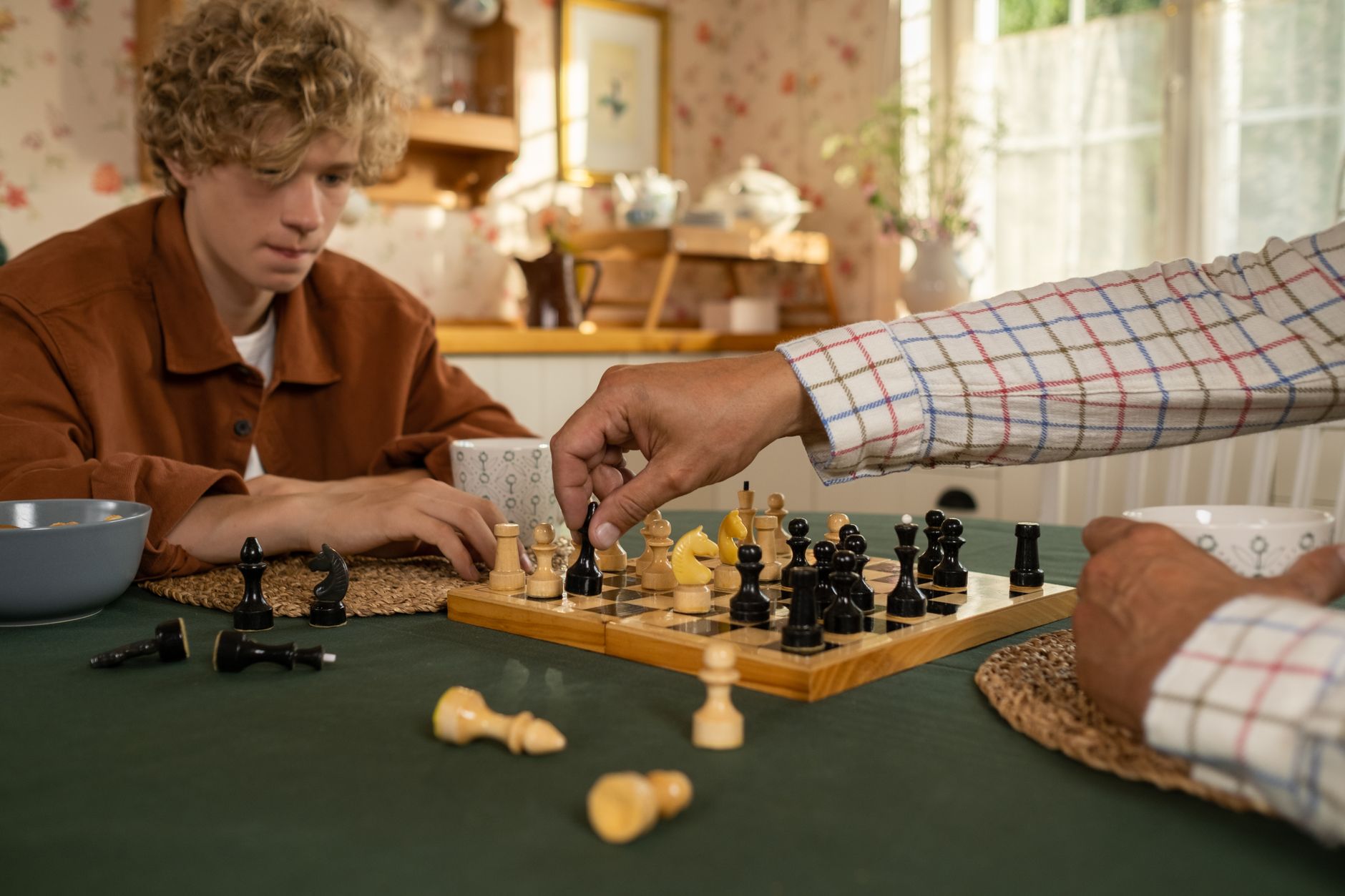
Getting a four-year-old and a twelve-year-old to agree on a board game feels about as likely as getting them to agree on a TV show. One wants something simple and fast, the other wants a challenge worth their time, and somewhere in the middle a parent is hoping everyone stays at the table long enough to actually finish a round.
Mixed-age game nights are one of the most common pain points families run into, and most advice online either skews too young or too old to be genuinely helpful. The reality is that with a bit of know-how about game mechanics and a few small adjustments to how you play, families with children spanning a wide age range can have game nights that everyone genuinely looks forward to.
This guide walks through what actually makes a game work across ages, how to handle the skill gap without anyone feeling patronized, and what to do when your teen is rolling their eyes before the box is even opened.
Why Age Gaps Are Actually the Hardest Part of Game Night
Most board games are designed for a fairly narrow age band. A game built for a seven-year-old will bore a thirteen-year-old in minutes, and a game with complex strategy or lots of reading will frustrate a young child quickly. The challenge is not finding a game a five-year-old can play, or one a teenager will respect. The challenge is finding one where both can be genuinely engaged at the same time.
Child development research points to why this is tricky. Clinical psychologist Beatrice Tauber Prior notes that strategy games help develop the frontal lobes of the brain, which are responsible for executive function skills like planning, organizing, and making good decisions. These skills are still forming in younger children, which means a game demanding complex strategy leaves them behind structurally, not just in terms of experience. Understanding this helps parents set realistic expectations rather than blaming a child for struggling with a game that was never built for their developmental stage.
The Mechanics That Make Mixed-Age Games Work
Not all games are created equal when it comes to age spans. The ones that work across a wide range tend to share a few key mechanical features.
Luck balanced with skill. The best mixed-age games are ones where luck balances skill so younger kids can still win. When a five-year-old can occasionally beat a ten-year-old through the draw of a card or a lucky roll, the gap feels smaller and the younger player stays invested.
Low reading requirements. Games that rely heavily on reading cards or rules text quietly exclude younger children, often without anyone noticing. Look for games that use pictures, colors, or simple symbols so younger players can participate independently.
Adjustable complexity. Some games allow older players to take on more strategic roles while younger ones handle simpler tasks within the same game. In a mixed-age family, a preschooler can match colors, an older sibling can help plan the order of moves, and an adult can model calm teamwork language within the same session.
Short rounds or modular play. Younger children have shorter attention spans, and long games can lose them before the end.
Cooperative Games as a Shortcut for Mixed-Age Play
One of the most practical solutions for families with a wide age spread is to lean into cooperative games, where everyone works together against the game itself rather than against each other. Nobody has to go easy on the youngest player because everyone is already on the same team. This removes the awkward dynamic of adults deliberately losing to keep a younger child engaged, which children often sense and resent.
Research studying children ages four to six found that children enjoyed cooperative games more than competitive ones, and that cooperative play increased cooperative behavior and decreased aggressive behavior during and after play.
Cooperative games also give older children and teens a meaningful role. Rather than being bored by a simple game, an older sibling can take on more complex planning while a younger child handles smaller tasks. Teens in particular tend to appreciate cooperative games where everyone wins or loses together because it removes the ego from the competition. If you are looking for a starting point for your family, our roundup of the best board games for kids under 10 includes several titles that work well in this cooperative format.
How to Handle the Skill Gap Without Anyone Feeling Patronized
Even with a great game, the skill gap between a young child and an older sibling or teen can create tension. The goal is to bridge it without making either player feel like they are being managed.
Give younger players a legitimate advantage. Many games allow for small house rules that level the field. Letting a younger child draw an extra card, take an extra turn, or skip a penalty round keeps them competitive without anyone needing to throw the game.
Give older players a meaningful challenge. Teens will disengage fast if a game feels beneath them. Assigning them a harder role, a tighter constraint, or a secondary scoring goal within the same game keeps them genuinely challenged. Board games offer kids meta-messages about life, and they are also a good way to encourage kids of different ages to team up and work together, something they will need to do throughout life.
Let older kids teach the rules. This gives teens and older children a sense of ownership and authority at the table, which matters enormously to kids who might otherwise see game night as a kid activity beneath their age. Teaching a game also deepens their own understanding of it, so everyone benefits.
When Your Teen Refuses to Play: What Actually Works
Getting a teenager to sit down for family game night can feel like the hardest part. The key is not pressure, it is buy-in. A teen who helped choose the game is far more likely to engage than one who was told what to play.
It is important to select games that are appropriate for a child’s age, development, and skill level, and including your child in the decision-making process when selecting games helps. For teens, this matters even more. Let them veto games and nominate alternatives. Give them genuine influence over the choice.
Teenagers resist games that feel childish, so keep the selection age-appropriate enough that they can feel respected. Games with social deduction, wordplay, or strategy tend to land well with older kids because they reward the kind of lateral thinking and social awareness teens are actively developing. For a sense of what engages older kids, the titles in our best board games for ages 10 and up roundup offer a solid starting point. Finally, keep early sessions short. A 20-minute win for a skeptical teen is worth far more than a 90-minute slog that confirms their worst suspicions about game night.
Research from the University of Florida found that kids who practice strategizing and solving problems with their parents end up having better memory techniques and more success at solving problems on their own. That payoff is worth working for, even if it takes a few attempts to get everyone at the table.
Related Guides
- the best board games for kids under 10
- best board games for ages 10 and up
- games that adults genuinely enjoy playing too
- themed games that bridge the age gap around shared interests
Frequently Asked Questions
What age gap is too big for the same board game?
There is no hard rule, but a gap larger than six or seven years usually needs a game specifically designed for it or a house rule to level the field. Cooperative games and luck-heavy games tend to handle wide age gaps the best because younger players can contribute meaningfully without needing adult-level strategy.
How do I stop an older sibling from dominating game night for younger kids?
Assign the older child a harder personal challenge within the game, like completing a secondary goal or using only certain strategies. You can also give them the role of rule-keeper or coach, which channels their advantage into something helpful rather than competitive.
How long should a family game night last when you have young kids?
For families with children under six, aim for 20 to 30 minutes total. You can always play a second short game if everyone is still engaged. Ending on a high note while kids still want more is far better than pushing through a game until someone melts down.
Is it okay to let a younger child win on purpose?
Deliberately throwing a game is usually not necessary and can backfire if an older child notices, which can cause resentment. A better approach is choosing games where luck plays a genuine role, so a younger child can win fairly, or using small structural advantages like extra turns rather than faking a loss.