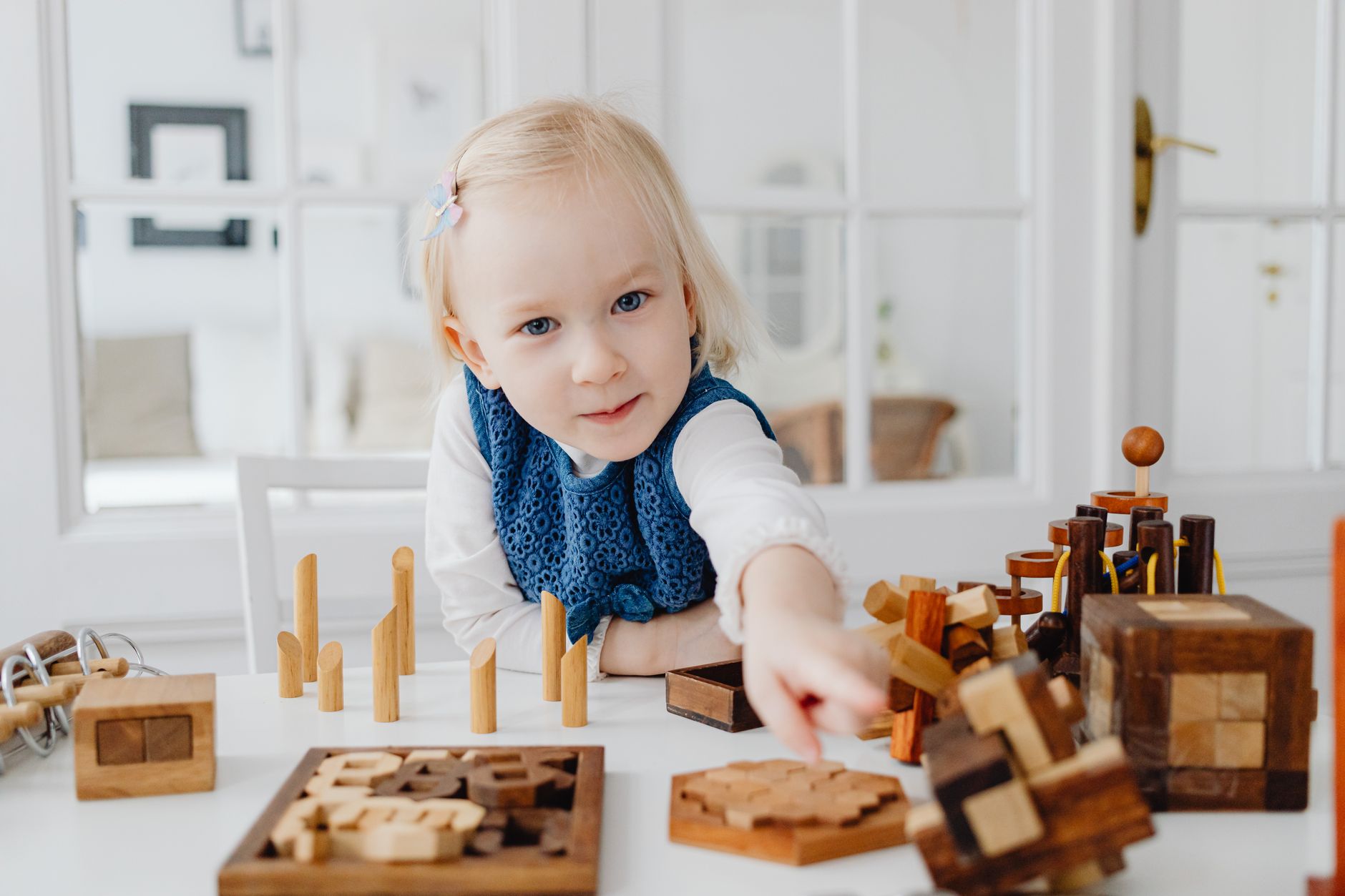
If you have a puzzle shoved in the back of a closet that only comes out on rainy days, it might be time to dust it off. Puzzles are one of those deceptively simple activities that look like quiet entertainment but are doing a lot of developmental heavy lifting behind the scenes.
Parents often wonder whether puzzles are actually worth the space they take up, especially when kids drift toward screens. The research gives a pretty clear answer: puzzle play is connected to stronger spatial reasoning, better fine motor skills, improved attention, and even early math readiness. These are not small benefits.
This guide walks through what the science actually says, how the benefits shift as kids grow, and how to choose the right puzzle for the child in front of you right now — not just the one on the birthday cake.
What the Research Actually Says About Puzzles
A landmark study from the University of Chicago tracked children between ages 2 and 4 and found that those who played with puzzles regularly went on to develop stronger spatial skills — specifically, the ability to mentally rotate and transform shapes. Crucially, this finding held across different income levels and parent education backgrounds, suggesting puzzle play is a meaningful equalizer.
Spatial reasoning is not just about assembling pictures. It underpins geometry, reading maps, understanding diagrams, and is a reliable predictor of success in STEM fields. Research published in Psychological Science found that children who engaged with puzzles, blocks, and board games more than six times per week scored significantly higher on spatial reasoning tests than peers who rarely did. Even short sessions add up — consistent exposure over weeks and months is what drives the benefit, not marathon puzzle sessions on a single afternoon.
The Skills Puzzles Build at Each Stage of Development
Puzzles are not one-size-fits-all, and what they develop changes meaningfully as children grow.
Toddlers (ages 1–3): Large knob and chunky tray puzzles develop grip strength, hand-eye coordination, and basic shape recognition. Children this age primarily use trial and error, which is still developmentally productive.
Preschoolers (ages 3–5): By four, children begin using the completed image as a guide rather than just testing pieces randomly. This shift reflects real cognitive growth. Puzzles at this stage also support fine motor control, visual perception, and early pattern recognition.
Early school age (ages 5–8): Children build focus, persistence, and problem-solving strategies. Completing a puzzle they found genuinely challenging delivers a confidence boost that is hard to replicate with simpler activities.
Tweens and up (ages 9+): Larger puzzles demand sustained attention and working memory. Research links regular puzzle engagement at this stage to stronger visual memory and concentration skills — useful in school settings too.
Choosing the Right Puzzle for Your Child’s Age and Ability
Piece count is the easiest guide, but it is a starting point rather than a rule. The real goal is a puzzle your child can finish with some effort and a little help — not so easy it is boring, not so hard it causes frustration and gives up.
- Ages 12–24 months: 2–6 piece wooden knob puzzles
- Ages 2–3: 6–24 large chunky pieces
- Ages 3–5: 24–60 pieces with bold, colorful images
- Ages 5–8: 60–150 pieces; children can increasingly work independently
- Ages 8–12: 200–500 pieces; multi-session projects are appropriate
- Ages 12 and up: 500+ pieces; theme and image matter more than piece count
Beyond count, image contrast matters. A piece-dense area of solid sky is harder than a busy, detailed scene with distinct color blocks. When in doubt, step slightly below what you think your child can handle — a puzzle they complete successfully builds far more confidence than one they abandon halfway through.
How Parents Can Multiply the Benefits During Puzzle Play
Sitting with your child during puzzle time is not just nice — it has a measurable effect on what they learn. Research from Stanford’s DREME Network found that when parents use spatial language while working on puzzles together, the developmental benefits increase meaningfully.
Spatial words are the key ingredient. Saying things like “let’s flip that piece over,” “try rotating it,” “does that edge look straight or curved?” and “we need a corner piece here” exposes children to vocabulary that directly supports spatial thinking. Studies show that parental use of this kind of language during puzzle play predicts children’s own spatial reasoning development.
A few practical habits that help:
- Praise effort, not ability. Saying “you worked hard on that” rather than “you are so smart” encourages kids to persist through harder puzzles over time.
- Let them struggle a little. Resisting the urge to hand over the right piece is one of the most effective things a parent can do.
- Keep a puzzle in progress. Having one out on a table means kids drift toward it naturally in spare moments.
Puzzles as a Screen-Free Anchor for Family Time
One underrated strength of puzzles is that they work well across mixed ages and mixed moods. Unlike board games, which often require everyone to participate at the same level and attention span, a puzzle in progress on the table invites casual drop-in engagement. A teenager can work on it while chatting; a younger sibling can add a few pieces before dinner.
Puzzles also offer something genuinely different from screens: they require physical manipulation, produce visible progress, and end with a tangible, completed thing. For families looking for screen-free activity that does not feel like a forced alternative to devices, puzzles sit in a comfortable zone — calming enough for a wind-down, engaging enough to hold a child’s attention for longer than most parents expect.
If your family already enjoys a regular game night, adding a shared puzzle in progress to the mix is a low-effort way to extend that habit without requiring everyone to be in the same place at the same time. You might be surprised how often someone quietly picks it up on their own.
Related Guides
Frequently Asked Questions
What age should kids start doing puzzles?
Children can start with large wooden knob puzzles as early as 12 to 18 months. By age 2 to 3, chunky tray puzzles with 6 to 24 pieces are appropriate, and standard jigsaw puzzles with 24 or more pieces become suitable around age 3 when choking risk decreases and children can follow a picture as a guide.
How many puzzle pieces is right for a 5-year-old?
Most 5-year-olds do well with puzzles in the 48 to 100 piece range, depending on the child’s experience level. If your child is new to puzzles, start toward the lower end; if they regularly complete 60-piece puzzles easily, stepping up to 100 pieces is a natural next move.
Do puzzles actually help with math and STEM skills?
Yes, according to research from the University of Chicago, children who play with puzzles between ages 2 and 4 develop stronger spatial reasoning, which is a reliable predictor of success in math and STEM fields. The benefit appears to be meaningful and holds across different income and education backgrounds.
Should I help my child with a puzzle or let them do it alone?
Doing puzzles together is more beneficial than letting children work entirely alone, especially for younger kids. Using spatial words like ‘rotate,’ ‘flip,’ ’edge,’ and ‘corner’ while helping has been shown to boost the developmental payoff. Let them make attempts and struggle a little before stepping in, rather than solving pieces for them.