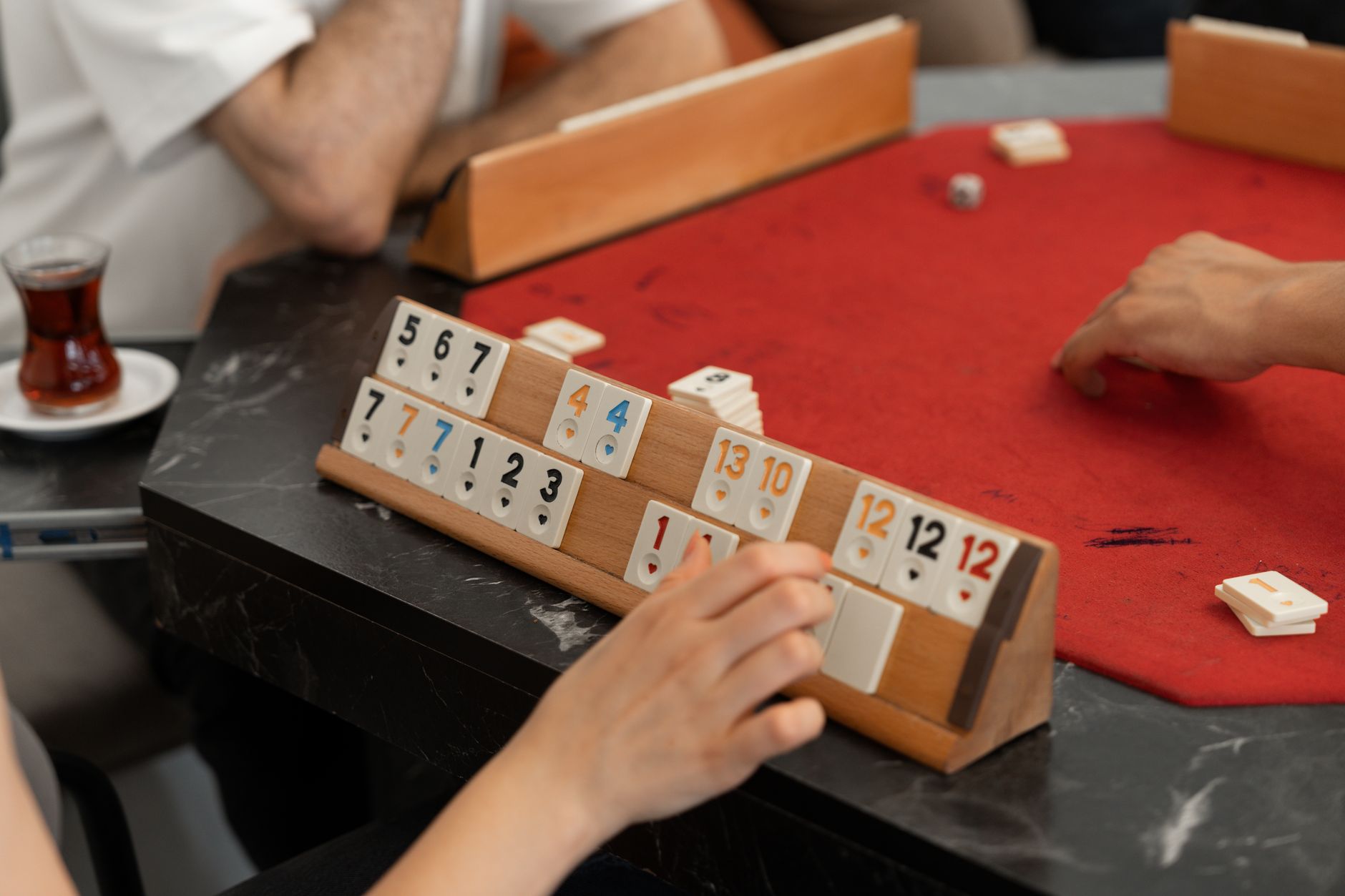
If you have ever felt a small flicker of guilt pulling out a board game instead of a workbook, you can let that go. A growing body of research suggests that sitting around a table and rolling dice, drawing cards, or moving pieces is doing real developmental work for your child — the kind that is genuinely hard to replicate with a worksheet or a screen.
That might sound like an overstatement, but the evidence keeps stacking up. Researchers in education, developmental psychology, and pediatric medicine have all turned their attention to board games in recent years, and the findings are striking across several different areas of development.
This post is not a pitch to replace homework or structured learning. It is simply a look at what the science actually shows, so that the next time your family sits down to play, you know you are doing something worthwhile for your kids, not just killing time before bed.
Board Games Build Real Math and Language Skills
One of the most consistent findings in recent research is the link between board games and early academic skills. A comprehensive review of 23 years of studies, published in the peer-reviewed journal Early Years, found that number-based board games measurably improve counting, addition, and number comparison in children ages three to nine. Researchers found that math skills improved significantly in more than half of the tasks analyzed after kids played these kinds of games.
Separate research involving over 500 primary school students in a randomized controlled trial found that playing modern board games during school hours produced meaningful gains in both executive function and core academic skills including reading and math. As one of the researchers put it, integrating board games into learning “actively supports the development of executive functions and basic academic skills in language and math among primary students.”
For parents, this means games that involve counting spaces, managing points, or reading cards are quietly reinforcing the skills your child is building in the classroom — without any of the pressure that comes with formal instruction.
They Teach Social Skills in a Way That Sticks
Board games are one of the few activities that put children in a structured social situation where they have to wait, communicate, negotiate, and cope with outcomes they did not choose. Psychologists at Manhattan Psychology Group note that games teach children skills like turn-taking, sharing, compromising, and handling disappointment in a setting that feels safe and familiar rather than high-stakes.
Research backs this up. A 2019 study found that an educational board game program produced significant improvements in social skills scores among fourth-grade children compared to a control group. A separate study published in late 2025 found that board game programs effectively cultivated social skills even in children with ADHD, a group that often struggles in less structured social environments.
For younger kids, the effect shows up early. Research in preschool-aged children found that both competitive and cooperative games increased prosocial behaviors like sharing and helping others. The beauty of a board game is that these lessons land naturally — no lecture required.
They Help Kids Handle Emotions, Including Losing
One thing parents notice quickly at the game table is how much emotion comes up. A child who is usually calm can melt down when a piece gets sent back to start. That reaction is not a problem — it is actually the whole point.
Board games create what researchers describe as a controlled environment where children experience and practice managing emotions like frustration, excitement, and disappointment. Losing in a game gives kids a low-stakes opportunity to feel genuinely upset and then figure out what to do with that feeling — and to try again next round.
Over time, this kind of repeated practice builds emotional regulation and self-control in a way that talking about those skills simply cannot replicate. Games that involve some element of luck are especially useful here for younger kids, because the outcome does not feel personal. When a child can eventually lose to chance and shake it off, they are building resilience that carries into school, friendships, and sports. The game table is, in this sense, a practice field for real life.
Family Game Time Strengthens Your Relationship With Your Kids
Beyond individual skills, research consistently points to shared family activities as a meaningful driver of children’s overall wellbeing. Regular game nights are documented to improve communication and emotional bonding among family members. For children, the experience of having a parent’s undivided, playful attention is itself developmentally valuable — and harder to come by than it sounds in a busy household.
Child development research emphasizes that prioritizing family time helps foster strong parent-child relationships, and board games offer a particularly good format for this because they give everyone a shared goal and a reason to talk. Unlike watching a movie together, a game requires interaction. Players have to discuss, react, and engage with each other in real time.
There is also something to be said for the modeling effect. When a parent demonstrates how to be a gracious loser, think through a strategy, or stay patient while waiting for their turn, children are watching and absorbing that behavior in a way that is far more memorable than being told how to behave.
How to Make the Most of Game Time at Home
Knowing that board games are genuinely beneficial is one thing; making them a consistent part of family life is another. A few practical principles help.
Match the game to your child’s current stage. A game that is too simple will bore an older child; one that is too complex will frustrate a younger one. Researchers note that attention span and interest matter — a child who is engaged with the theme and mechanics of a game gets far more out of it than one who is just going through the motions.
Keep sessions short and positive, especially at first. Short, fun games build the habit and the appetite for more. Not every session needs to be a full-length campaign.
Let kids lose without rescuing them. The emotional regulation benefit only comes if children have a chance to feel the discomfort of losing. Being there to acknowledge the feeling — without fixing it or letting them win — is where the real parenting work happens at the table.
Play regularly, not just on rainy days. The research benefits compound with repetition. A game night that happens once a week will do more for your child than an occasional marathon session.
Related Guides
- age-appropriate games for younger children
- games that grow with older kids
- games the whole family will actually want to play together
Frequently Asked Questions
What age should kids start playing board games?
Most children can begin with simple, luck-based games around ages three to four. At this stage the goal is not strategy but learning to take turns, follow rules, and handle winning and losing. The games grow with them from there.
Do board games actually help with math skills?
Yes. Multiple peer-reviewed studies have found that number-based board games improve counting, addition, and number comparison in children as young as three. The effect is consistent enough that some researchers have recommended incorporating games into early childhood classrooms.
Are board games better for kids than educational apps?
Research suggests board games offer benefits that most apps do not, particularly in social skills, emotional regulation, and face-to-face communication. Educational apps can have real value, but they cannot replicate the practice of sitting with others, waiting your turn, and managing real emotions in real time.
How do I get my child to be a better loser at board games?
The most effective approach is consistent play and consistent modeling. Let your child experience losing without rescuing them from the feeling, acknowledge the emotion without dismissing it, and make sure they see you handle a loss calmly too. Over several months of regular play, most children improve significantly.